Scenario management
Access and overview
Scenarios are managed from the left sidebar, the Scenarii section lists all scenarios for the project. You can expand or collapse this section. When the sidebar is expanded, you will see:
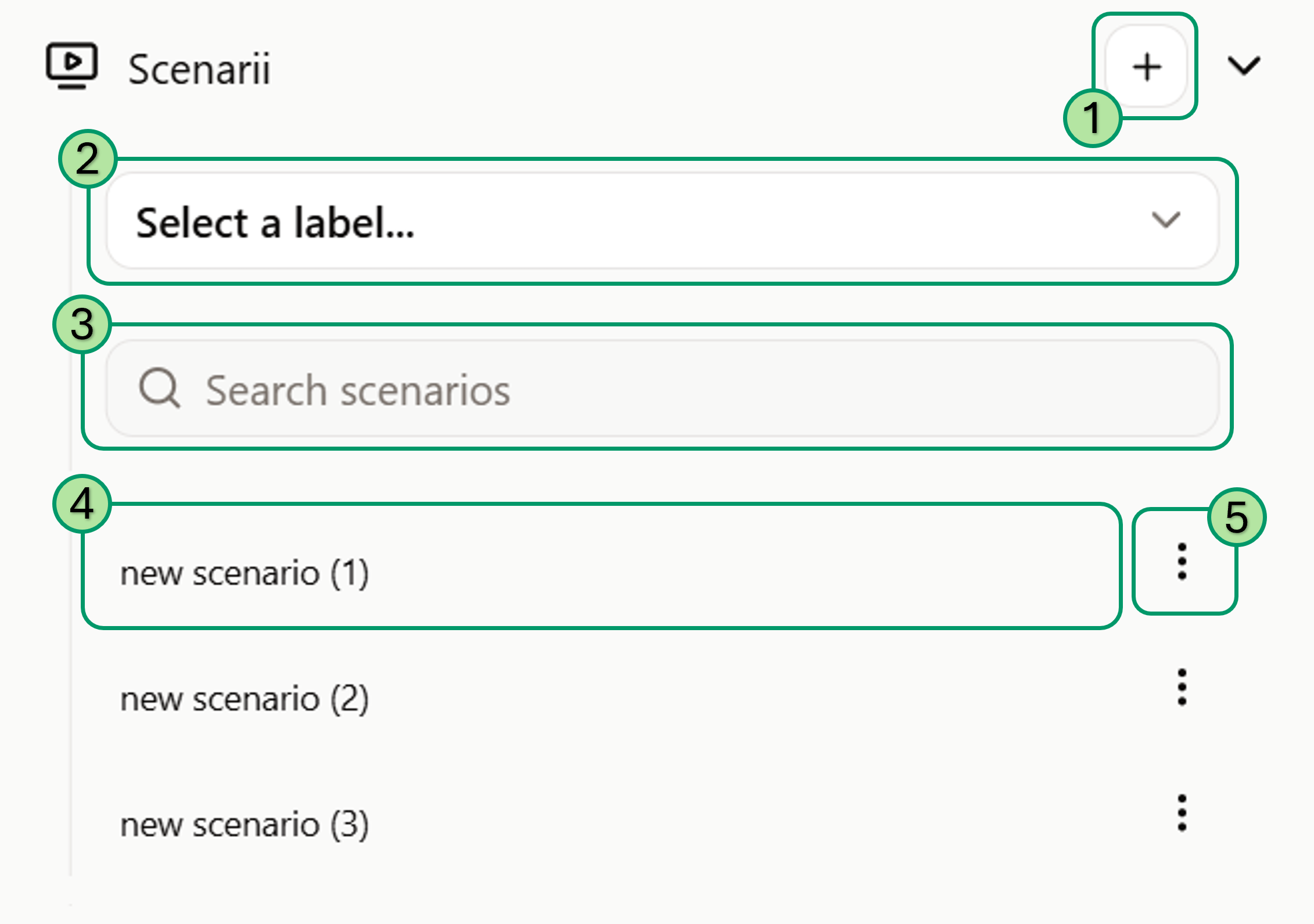
- A + button next to "Scenarii" to create a new scenario
- A Select a label... dropdown to filter scenarios by label
- A Search scenarios field to filter by scenario name
- The List of scenarios, you can open on by double clicking on its name
- For each scenario, a button to access the pop-up menu with: Open, Settings, Statistics, Copy, Delete
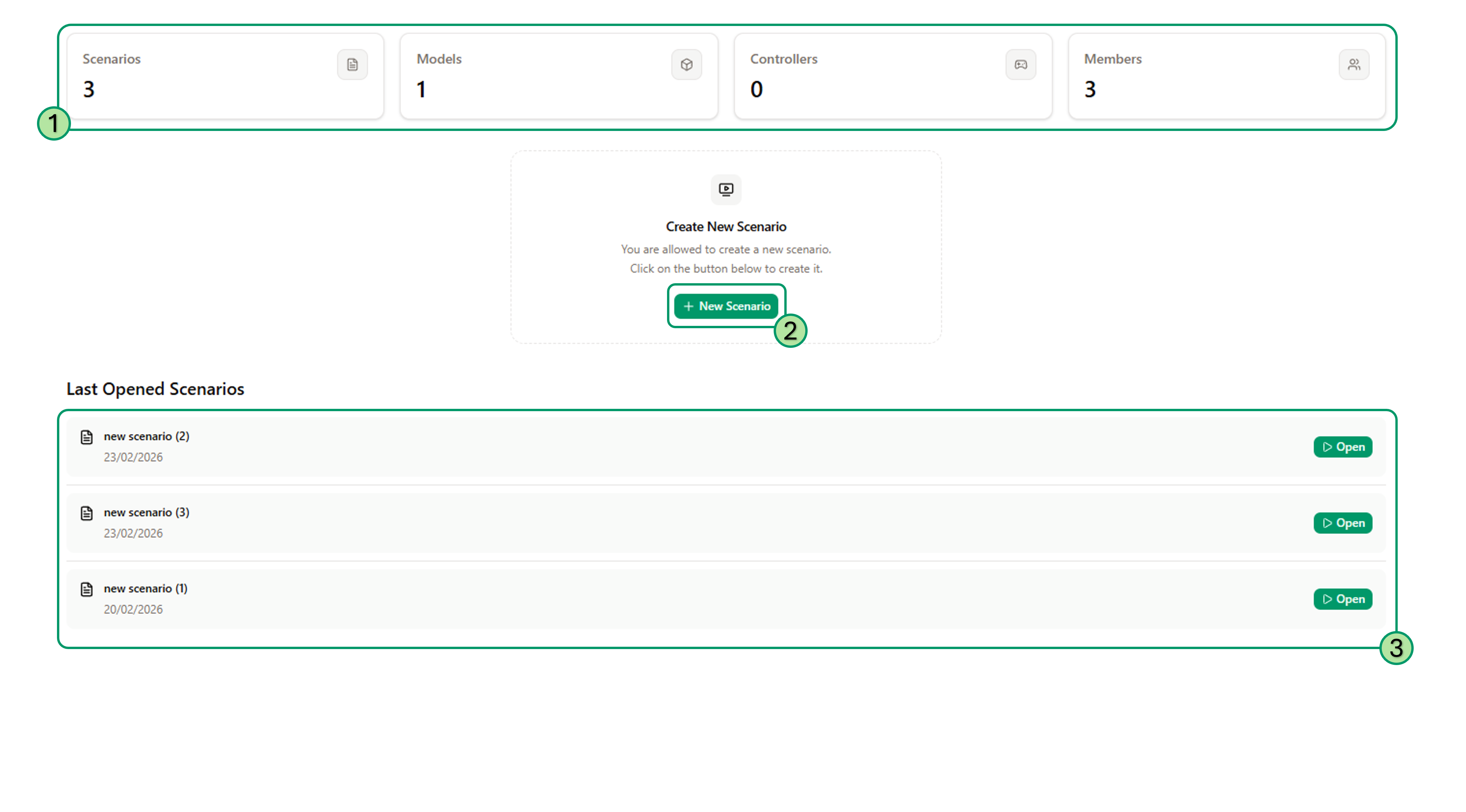
In the main area, when no scenario is open, you will see:
- Overview cards showing counts for Scenarios, Models, Controllers, and Members
- A Create New Scenario card with the button + New Scenario
- The Last Opened Scenarios list with an Open button for each recent scenario
Create and manage labels
Labels help you organize and filter scenarios. You create, edit, and delete them from Project Resources.
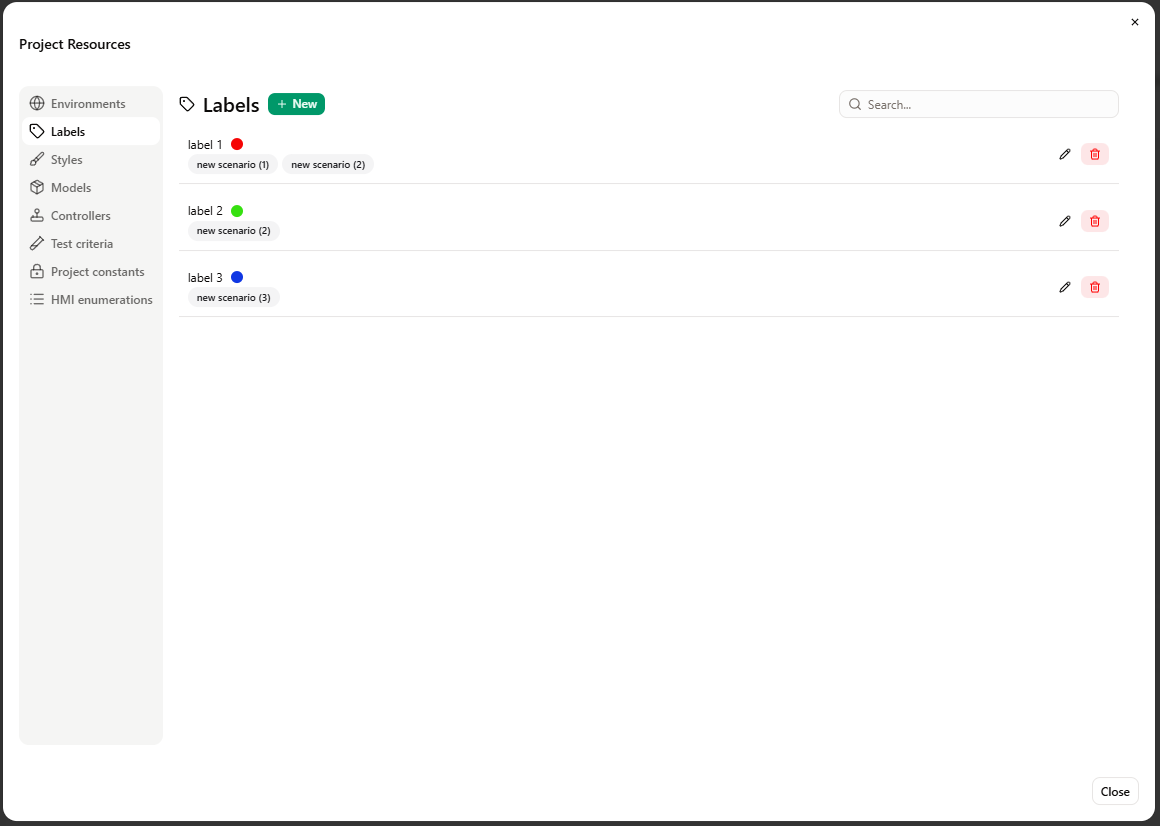
Open Project Resources and select Labels in the left sidebar (alongside Environments, Styles, Models, Controllers, Test criteria, Project constants, and HMI enumerations). The main area shows the Labels list:
- + New: Click this button to create a new label.
- Search...: Use the search field to find a label by name.
- Label list: Each label appears with its name, a color indicator, and the scenarios it is applied to. For each label you can:
- Click the Edit icon to change the label’s name, description, or color.
- Click the Delete icon to remove the label.
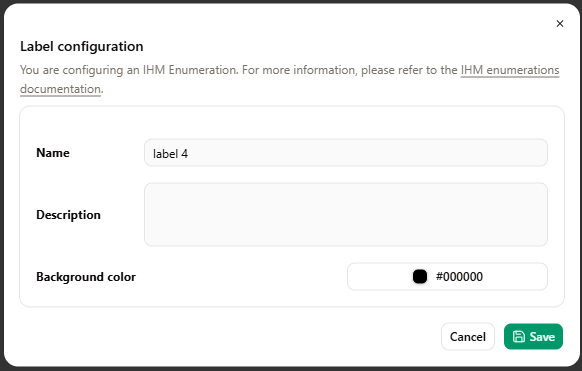
When creating or editing a label, the Label configuration dialog opens:
- Name: Enter or change the label name (e.g. "label 4"). The name is typically unique in the project.
- Description: Optionally add a description for the label.
- Background color: Set the label’s color using the color picker; the hexadecimal value (e.g. #000000) is displayed.
Click Save to apply your changes or Cancel to close without saving.
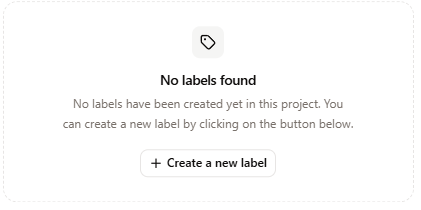
If no labels is present in your project. You'll be able to set up a new one when creating a editing a scenario or trying to filter the scenarios by label by clicking on the Create a new label.
Create and manage scenarios
Create a scenario
The dialog lets you define the initial properties for the new scenario. Enter a name for the new scenario; you can configure the rest of the scenario parameters after creation.
- Scenario name: Choose a name for the new scenario. The application checks that the name is not already used in the project. The field may suggest a default such as "new scenario (4)" based on existing names.
- Open scenario after creation: Check this option to open the new scenario automatically as soon as it is created.
- Labels: In this section, choose the labels to apply to the new scenario. Use the "Search labels" field to filter the list, then check or uncheck the labels you want.
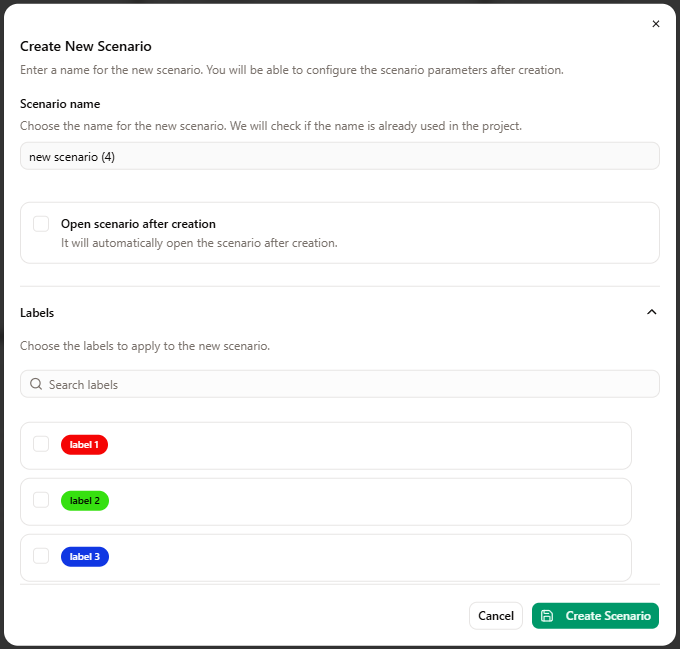
Click Create Scenario to create the scenario, or Cancel to close the dialog without creating.
You cannot use a name that already exists in the project. If the project has no environment yet, creation will fail.
Managing a scenario
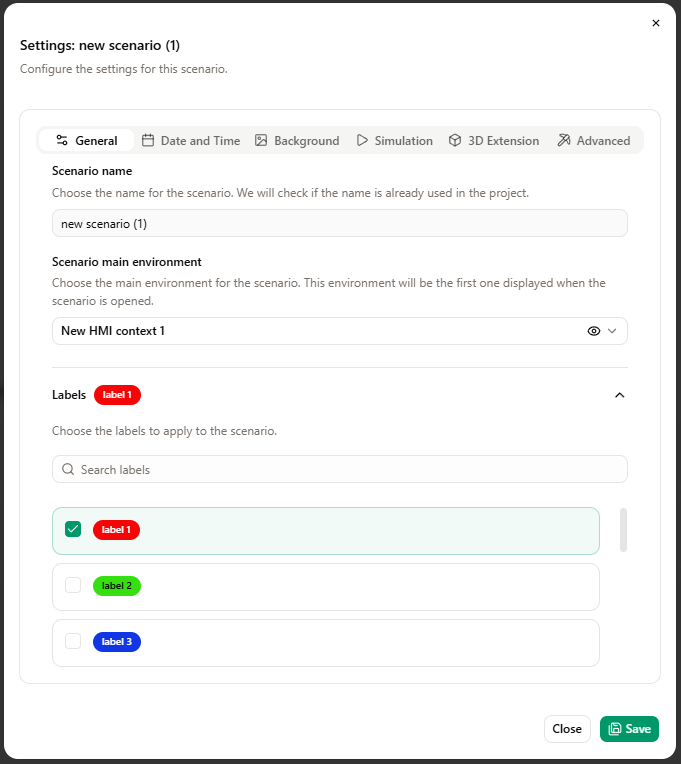
Open the scenario menu in the sidebar and click Settings to open the dialog. In the General tab you can set the Scenario name, the Scenario main environment (the environment displayed first when the scenario is opened), and the Labels applied to the scenario. Use the "Search labels" field to find and select or clear labels.
Scenario statistics
To view detailed information and statistics for a scenario:
- Open the scenario menu in the sidebar.
- Click Statistics.
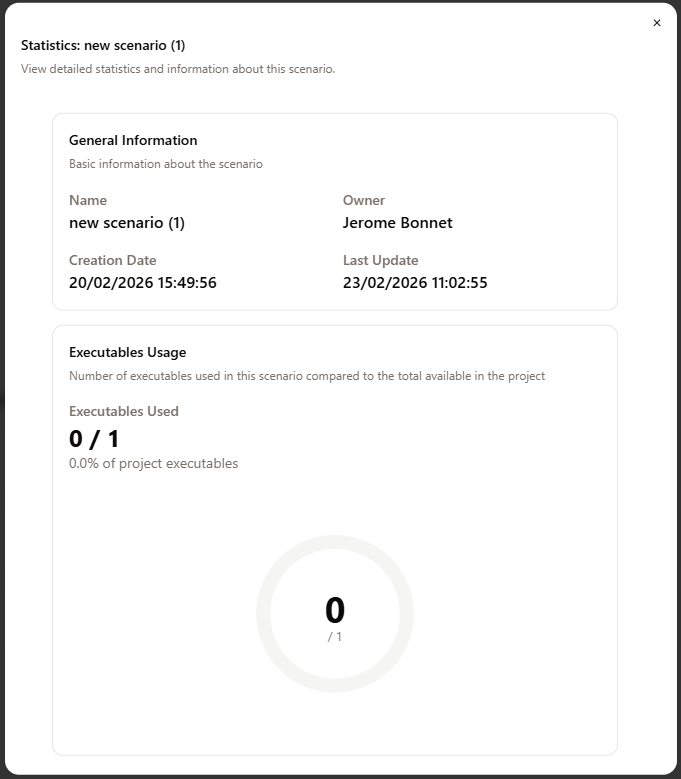
The Statistics dialog shows:
- General Information: Name, Owner, Creation Date, Last Update.
- Executables Usage: Number of executables used in this scenario compared to the total available in the project.
Copy scenario
To create a copy of an existing scenario:
- Open the scenario menu in the sidebar.
- Click Copy.
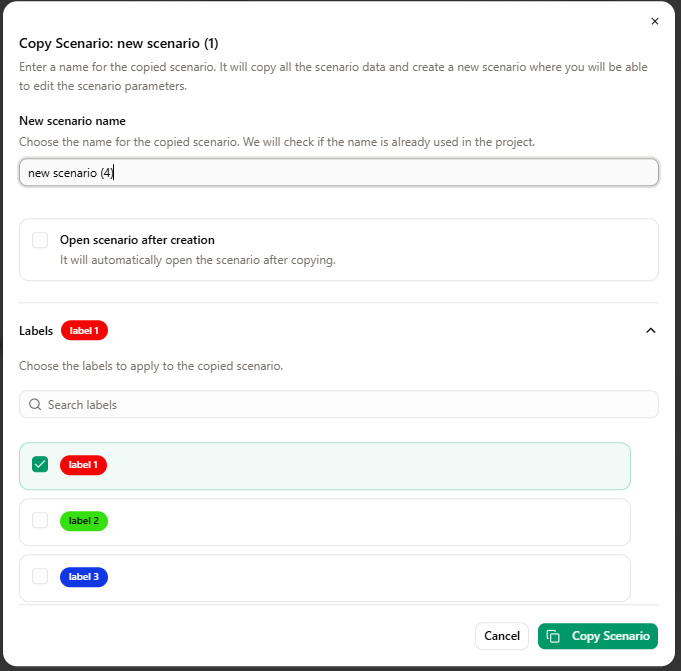
- In the Copy Scenario dialog:
- Enter a New scenario name (must be unique in the project).
- Optionally check Open scenario after creation to open the copied scenario when the operation finishes.
- In the Labels section, adjust the labels for the copy (they are pre-filled with the source scenario’s labels).
- Click Copy Scenario (or Cancel).
You must have permission to edit the project to copy a scenario."
Delete scenario
To delete a scenario:
- Open the scenario menu in the sidebar.
- Click Delete.
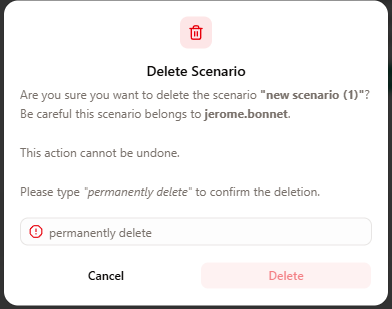
- In the confirmation dialog, read the message (it shows the scenario name and owner and states that the action cannot be undone).
- Type permanently delete in the confirmation field to enable the delete button.
- Click Delete to confirm, or Cancel to abort.
As a contributor of a project, you can only delete your own scenarios (the ones you created).
As the owner of a project, you can delete any scenario (yours and those created by contributors).